
Digital marketing has become an important part of running a business online. Whether you own a small business, manage a company website, sell products, or provide services, reaching the right audience on the internet can make a big difference. Today, customers use Google, social media platforms, search engines, websites, and online marketplaces to find products and services. This is why businesses need a proper digital marketing strategy to stay visible and competitive.
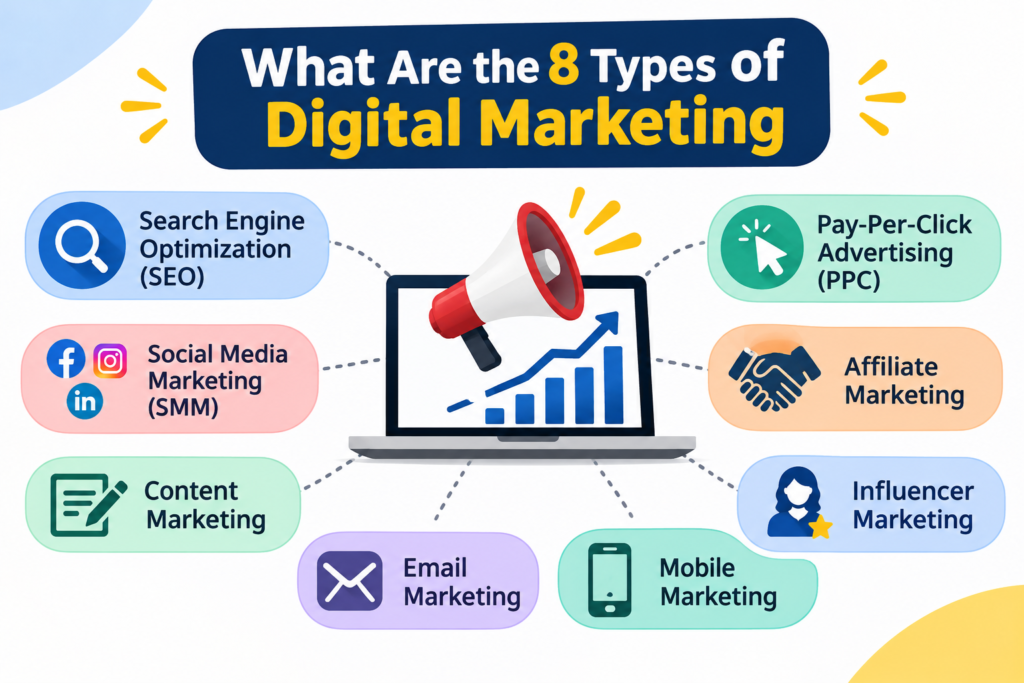
Digital marketing is not limited to running advertisements or posting on Facebook and Instagram. It includes several activities, such as Search Engine Optimization (SEO), Social Media Marketing (SMM), Content Marketing, Email Marketing, Pay-Per-Click Advertising (PPC), Affiliate Marketing, Influencer Marketing, and Mobile Marketing.
Each type has a different purpose. Some help businesses improve their Google rankings, while others bring website traffic, generate leads, increase brand awareness, and encourage customers to make a purchase.
Let’s understand the 8 main types of digital marketing, how they work, and how businesses can use them to grow online.
What Is Digital Marketing?
Digital marketing refers to promoting products, services, and brands through online platforms and digital channels. It allows businesses to connect with potential customers through search engines, websites, social media, emails, mobile applications, and paid advertising platforms.
Unlike traditional marketing methods such as newspaper advertisements, television commercials, and billboards, digital marketing makes it easier to reach a specific audience and measure campaign performance.
For example, a company can use SEO to appear in Google search results, Facebook Ads to reach potential customers, and email marketing to stay connected with existing clients.
Some common objectives of digital marketing include:
- Increasing website traffic through organic and paid channels.
- Improving brand awareness and online visibility.
- Generating qualified leads and business inquiries.
- Increasing online sales and conversions.
- Building customer relationships and brand loyalty.
- Reaching local, national, and international audiences.
- Improving return on investment (ROI).
8 Types of Digital Marketing You Should Know
Here are eight important digital marketing strategies that businesses use to build their online presence and attract customers.
1. Search Engine Optimization (SEO)

Search Engine Optimization (SEO) is one of the most popular types of digital marketing. It focuses on improving a website’s visibility in organic search engine results. When people search for products, services, or information on Google or Bing, SEO helps relevant websites appear in front of them.
The main objective of SEO is to attract organic traffic without paying for every website click.
SEO generally includes three major areas:
On-Page SEO: This involves optimizing website content, title tags, meta descriptions, headings, internal links, image alt text, keyword placement, and URL structure.
Off-Page SEO: It focuses on activities outside the website, including quality backlink building, digital PR, brand mentions, and online reputation management.
Technical SEO: This includes improving website speed, mobile-friendliness, website architecture, XML sitemaps, indexing, crawlability, HTTPS security, and Core Web Vitals.
Businesses also use keyword research to understand what their target audience searches for online. For example, a travel company may target keywords such as “cheap flight booking,” “best holiday packages,” or “international flight deals.”
Benefits of SEO:
- Increases organic website traffic.
- Improves Google and Bing search rankings.
- Builds website credibility and trust.
- Helps attract users with purchase intent.
- Supports long-term online visibility.
- Improves the overall user experience.
SEO is particularly useful for businesses that want consistent website traffic and long-term growth.
2. Social Media Marketing (SMM)
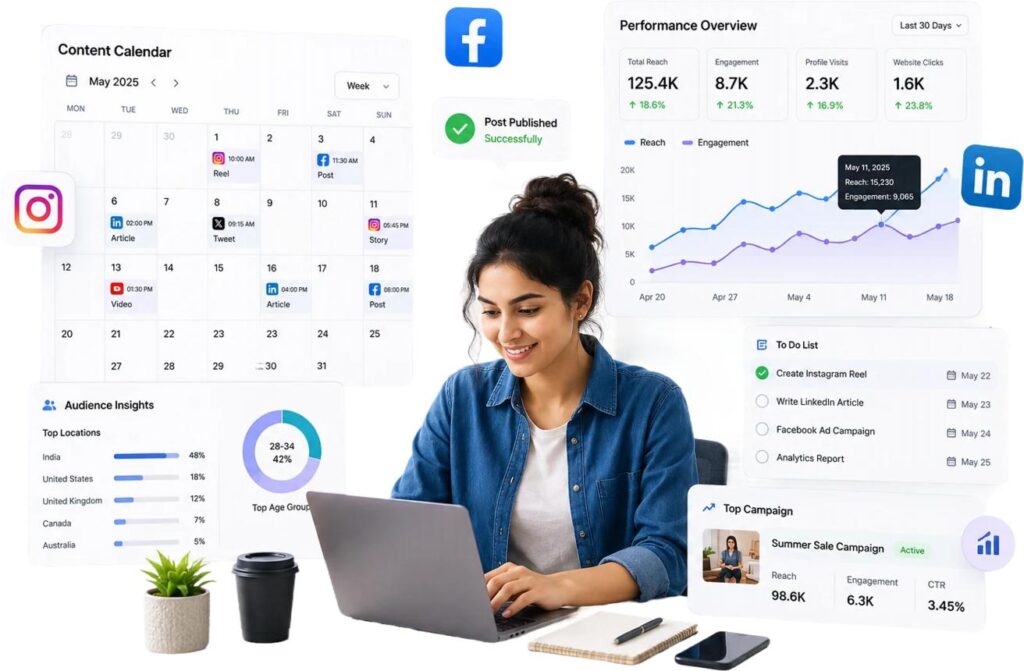
Social Media Marketing involves promoting a business, product, or service through social networking platforms. It helps brands communicate directly with their target audience, share updates, promote offers, and build an online community.
Popular social media marketing platforms include:
- YouTube
- TikTok
- X (formerly Twitter)
- Snapchat
Social media marketing includes both organic and paid activities. Organic social media marketing involves publishing regular posts, reels, stories, videos, and other content without paying for advertising.
Paid social media marketing uses advertising campaigns to reach selected audiences based on their interests, location, age groups, and online behavior.
For example, a clothing brand can publish Instagram reels to showcase its latest collection and run Facebook Ads to reach people interested in fashion.
Benefits of Social Media Marketing:
- Builds brand awareness and recognition.
- Increases audience engagement.
- Generates website traffic and business leads.
- Helps promote products and services.
- Supports customer communication.
- Creates opportunities for community building.
A consistent social media strategy can help businesses develop stronger relationships with their customers.
3. Content Marketing

Content marketing is the process of creating and sharing useful, relevant, and informative content to attract and retain a specific audience. Instead of directly selling products in every post, businesses provide information that helps people understand their needs and make better decisions.
Content marketing can be used across websites, blogs, social media platforms, email newsletters, and video channels.
Common content marketing formats include:
- Blog posts and articles.
- Website landing pages.
- Informational guides and tutorials.
- Infographics and visual content.
- Case studies and industry reports.
- E-books and downloadable resources.
- Videos and podcasts.
- Frequently asked questions (FAQs).
For example, a digital marketing agency can publish blogs about SEO techniques, keyword research, website optimization, Google ranking factors, and social media strategies. This content can attract people who are searching for digital marketing services.
Benefits of Content Marketing:
- Attracts relevant website visitors.
- Supports SEO and keyword rankings.
- Builds authority in a particular industry.
- Educates potential customers.
- Generates leads through informative content.
- Helps improve customer engagement.
Good content marketing focuses on answering real customer questions rather than simply adding keywords to a page.
4. Pay-Per-Click Advertising (PPC)

Pay-Per-Click (PPC) advertising is a paid digital marketing method in which advertisers pay when someone clicks on their advertisement. It allows businesses to display ads on search engines, websites, and social media platforms.
Google Ads is one of the most commonly used PPC advertising platforms. Businesses can bid on specific keywords so their advertisements may appear when users search for related products or services.
For example, if someone searches for “digital marketing agency near me,” a marketing company can run a Google Search Ads campaign to promote its services.
Other popular PPC platforms include:
- Google Ads
- Microsoft Advertising (Bing Ads)
- Facebook Ads
- Instagram Ads
- LinkedIn Ads
- YouTube Ads
PPC campaigns can target users based on search queries, geographic location, demographics, interests, and other available audience signals.
Benefits of PPC Advertising:
- Provides opportunities for immediate website visibility.
- Reaches audiences with specific interests or search intent.
- Helps generate leads and sales.
- Allows businesses to control advertising budgets.
- Provides measurable campaign performance.
- Supports remarketing and conversion tracking.
PPC works well for businesses that want to promote specific offers, launch new products, or generate leads within a particular time frame.
5. Email Marketing
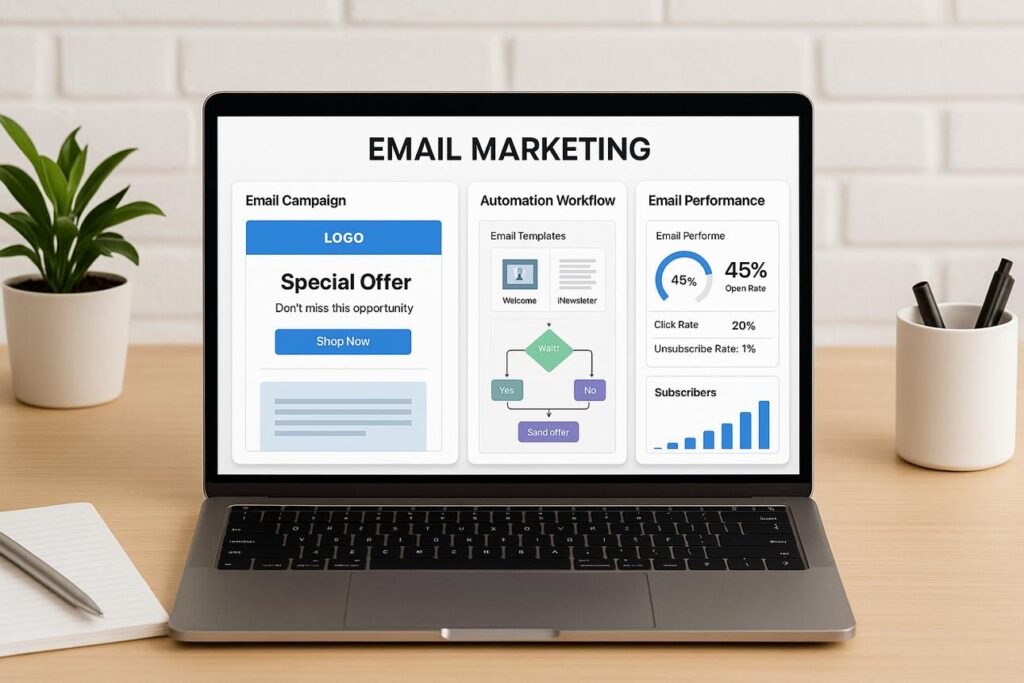
Email marketing is a direct marketing strategy that involves sending promotional messages, newsletters, business updates, and special offers to people through email.
It is commonly used to communicate with existing customers, nurture potential leads, and encourage repeat purchases.
Businesses collect email subscribers through website forms, newsletter subscriptions, customer registrations, and other permission-based methods.
Common types of email marketing campaigns include:
- Welcome emails for new subscribers.
- Promotional emails and discount offers.
- Monthly newsletters.
- Product launch announcements.
- Customer feedback and survey emails.
- Abandoned cart reminders.
- Follow-up and customer retention emails.
For example, an online travel agency can send subscribers updates about seasonal flight deals, hotel discounts, holiday packages, and travel offers.
Benefits of Email Marketing:
- Helps maintain direct customer communication.
- Supports lead nurturing and customer retention.
- Promotes new products and services.
- Encourages repeat purchases.
- Allows audience segmentation.
- Helps measure open rates, clicks, and conversions.
Email marketing is most effective when businesses send relevant messages to people who have agreed to receive them.
6. Affiliate Marketing
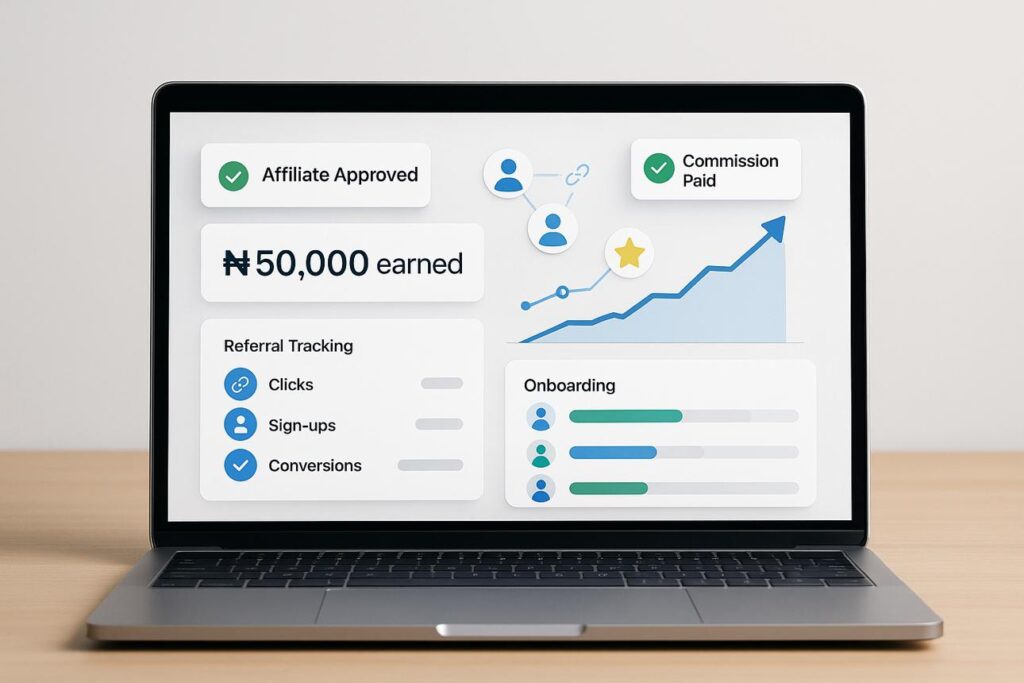
Affiliate marketing is a performance-based marketing strategy in which individuals or publishers promote another company’s products or services and earn a commission for generating qualifying sales, leads, or other agreed actions.
It creates a partnership between businesses and affiliates. Affiliates use special tracking links to promote products through websites, blogs, YouTube channels, newsletters, and social media accounts.
For example, a travel blogger can publish an article about the best hotel booking websites and include affiliate links. If readers make eligible bookings through those links, the blogger may receive a commission.
Some popular affiliate marketing networks and programs include:
- Amazon Associates
- CJ Affiliate
- Awin
- ShareASale
- Impact
- Rakuten Advertising
Benefits of Affiliate Marketing:
- Creates additional sales opportunities.
- Helps businesses reach new audiences.
- Offers performance-based payment models.
- Builds partnerships with publishers and creators.
- Supports product and service promotion.
- Can increase website referrals and conversions.
Affiliate marketing can be useful for businesses that want to expand their reach without managing every promotional activity themselves.
7. Influencer Marketing

Influencer marketing involves collaborating with social media personalities, content creators, and industry experts who have an established audience. Businesses work with these creators to promote their products, services, or brands through authentic content.
Influencers can have audiences of different sizes. Depending on their follower count and engagement, they are commonly categorized as nano, micro, macro, and mega influencers.
Common influencer marketing activities include:
- Sponsored Instagram posts and reels.
- YouTube product reviews.
- TikTok promotional videos.
- Brand collaborations.
- Product demonstrations.
- Social media giveaways.
- Affiliate partnerships with creators.
For example, a skincare company can collaborate with a beauty influencer who creates product demonstrations and shares their experience with followers.
Benefits of Influencer Marketing:
- Increases brand exposure.
- Helps businesses reach niche audiences.
- Builds awareness through creator recommendations.
- Generates social engagement.
- Supports product launches.
- Creates opportunities for user-generated content.
Choosing an influencer based on audience relevance, engagement quality, and credibility is more important than simply looking at follower numbers.
8. Mobile Marketing
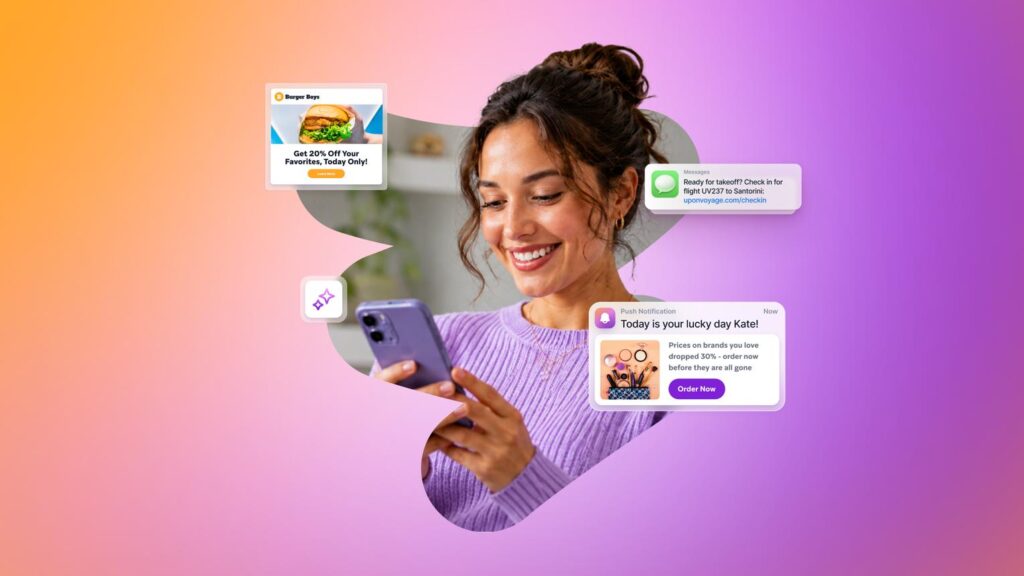
Mobile marketing focuses on reaching customers through smartphones, tablets, and other mobile devices. Since many people use mobile devices to browse websites, shop online, watch videos, and communicate, mobile marketing has become an important part of digital marketing.
It includes several promotional methods designed specifically for mobile users.
Common mobile marketing channels include:
- SMS marketing.
- Mobile app advertising.
- Push notifications.
- In-app promotions.
- Mobile-friendly website campaigns.
- Location-based marketing.
- QR code marketing.
- Mobile search advertising.
For example, an e-commerce business can send SMS notifications about new product launches, while a travel booking company can use app notifications to share booking updates and promotional offers.
Benefits of Mobile Marketing:
- Reaches customers through mobile devices.
- Supports direct and timely communication.
- Promotes mobile app downloads.
- Helps businesses share personalized offers.
- Improves mobile shopping experiences.
- Supports location-based promotions.
A mobile-friendly website, fast page loading, easy navigation, and clear calls to action are important for successful mobile marketing.
Difference Between the 8 Types of Digital Marketing
Although these eight digital marketing strategies have similar business objectives, each one works differently. Here is a quick comparison:
| Digital Marketing Type | Main Purpose | Common Platforms |
|---|---|---|
| SEO | Organic search visibility | Google, Bing |
| Social Media Marketing | Audience engagement | Instagram, Facebook, LinkedIn |
| Content Marketing | Inform and attract users | Blogs, websites, YouTube |
| PPC Advertising | Paid traffic and leads | Google Ads, Microsoft Ads |
| Email Marketing | Customer communication | Mailchimp, Brevo |
| Affiliate Marketing | Referral-based promotion | CJ Affiliate, Awin |
| Influencer Marketing | Creator-led brand promotion | Instagram, TikTok, YouTube |
| Mobile Marketing | Reach smartphone users | SMS, Apps, Push Notifications |
Which Type of Digital Marketing Is Best for Your Business?
There is no single digital marketing strategy that works for every business. The right approach depends on your business model, marketing budget, target audience, industry, and growth objectives.
Here are some examples:
- Small Businesses: Local SEO, Google Business Profile optimization, and social media marketing can help attract nearby customers.
- E-commerce Businesses: SEO, PPC advertising, influencer marketing, and email marketing can support online sales.
- Travel Companies: SEO, social media campaigns, affiliate marketing, and email promotions can help generate bookings.
- B2B Companies: LinkedIn marketing, content marketing, SEO, and email campaigns can help generate business leads.
- Startups: Content marketing, social media marketing, and targeted PPC campaigns can help build brand awareness.
- Service-Based Businesses: Local SEO, Google Ads, customer reviews, and social media marketing can help attract potential clients.
For many businesses, combining multiple digital marketing channels delivers better results than relying on only one strategy.
How to Create an Effective Digital Marketing Strategy
Understanding the different types of digital marketing is only the first step. Businesses also need a clear marketing plan to achieve their goals.
Here are some practical steps:
1. Define Your Business Goals: Decide whether you want more website traffic, qualified leads, online sales, brand awareness, or customer retention.
2. Identify Your Target Audience: Understand your customers’ interests, location, age group, online behavior, and purchasing requirements.
3. Research Relevant Keywords: Use keyword research tools to find search terms that your potential customers use on Google and other search engines.
4. Choose the Right Marketing Channels: Select SEO, social media, PPC, email, content marketing, or other channels based on your objectives.
5. Create Valuable Content: Publish helpful blogs, landing pages, social media posts, videos, and other content that answers customer questions.
6. Track Marketing Performance: Monitor website traffic, keyword rankings, click-through rates (CTR), conversion rates, engagement, and cost per lead.
7. Improve Your Campaigns: Review the results regularly and make changes to your SEO strategy, advertising campaigns, and content based on actual performance.
Frequently Asked Questions (FAQs)
The eight main types of digital marketing are Search Engine Optimization (SEO), Social Media Marketing, Content Marketing, Pay-Per-Click Advertising (PPC), Email Marketing, Affiliate Marketing, Influencer Marketing, and Mobile Marketing.
SEO, content marketing, and social media marketing are good starting points for beginners. These channels help individuals understand online audiences, create useful content, and build website visibility.
Yes, SEO is an important part of digital marketing. It helps websites improve their organic visibility on search engines and attract relevant visitors without paying for every click.
SEO focuses on improving website visibility in search engine results, while social media marketing focuses on promoting brands and engaging audiences through social networking platforms. Both can help increase brand awareness and website traffic.
Yes. Businesses can combine SEO, PPC, social media marketing, content creation, email campaigns, and other digital marketing methods to reach customers at different stages of their buying journey.
Yes. Digital marketing helps small businesses reach potential customers, promote their services, compete online, generate leads, and build brand recognition with budgets suited to their requirements.
Final Thoughts
Digital marketing offers several ways for businesses to connect with customers and grow their online presence. From improving search engine rankings through SEO to building customer relationships through social media and email marketing, every channel has its own advantages.
The key is to understand your business requirements and choose the marketing methods that match your goals. You do not need to use all eight types from the beginning. Start with the channels that are most relevant to your audience, track the results, and gradually expand your digital marketing efforts.
A well-planned combination of SEO, social media marketing, content creation, paid advertising, and customer engagement can help businesses build a stronger online presence and achieve sustainable growth.